Pattern 2 of 12 · Beginner · Home
Everyday Dishcloth
One new stitch, and a square that earns its keep
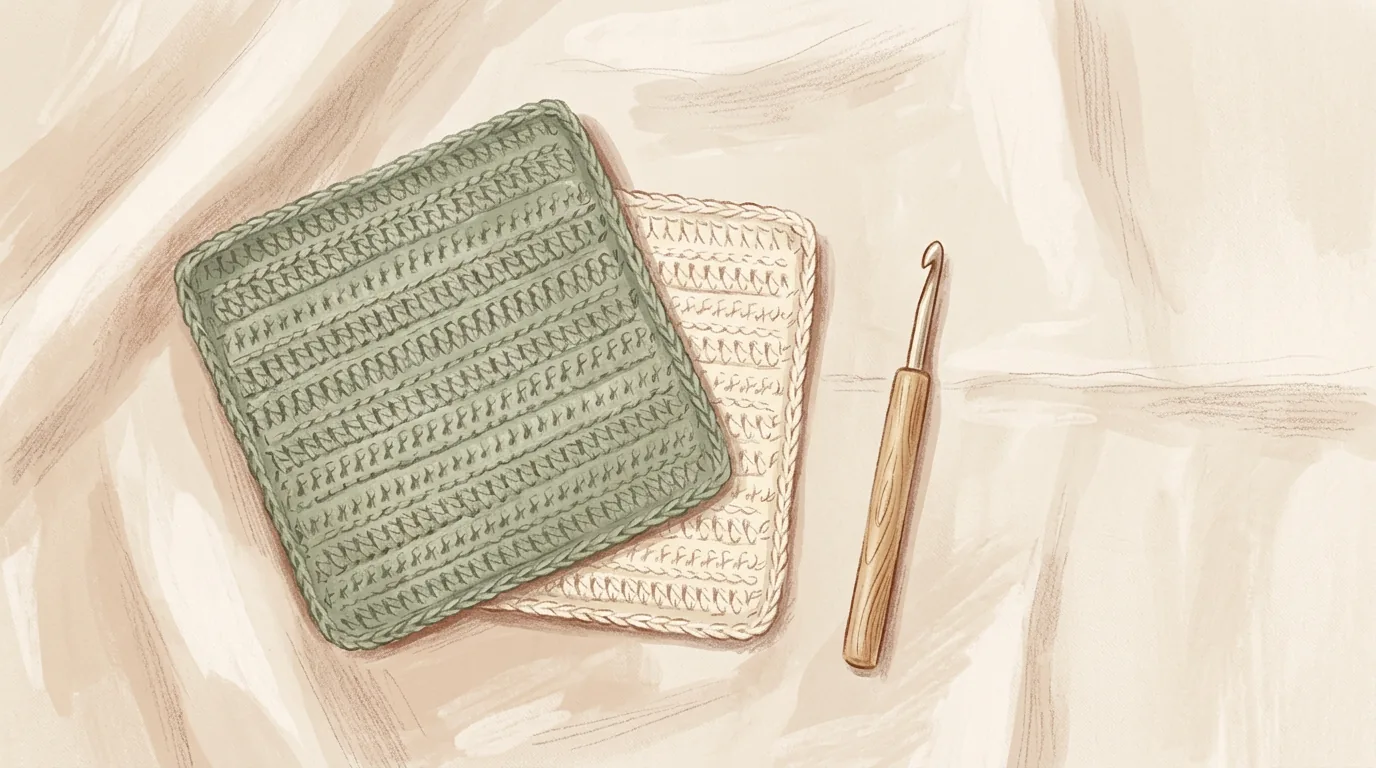
Design illustration. Colours and drape will vary with your yarn — this is a rendering of the design, not a photograph of a finished piece.
About this pattern
One new stitch, and everything changes. The half double crochet is taller than the single crochet you already know, which means your work grows noticeably faster — and it makes a slightly softer, more absorbent fabric that is exactly right for a kitchen.
This is the same flat rectangle you proved you could make in Pattern 1, scaled up to something genuinely useful. It is also where you start counting properly: 30 stitches, every row, no exceptions. A dishcloth is very forgiving of a mistake, which makes it the right place to build the habit before it matters.
What this pattern teaches you
- The half double crochet (hdc) — your second basic stitch
- Keeping edges straight over a longer piece
- Counting stitches as a habit, not a rescue
- Measuring gauge and understanding what it tells you
Skills you'll own by the end
Before you start: Pattern 1. You need the chain, the single crochet and a tidy fasten-off before this one will feel comfortable.
Materials
| Yarn | Worsted weight (Category 4) 100% cotton. Roughly 60 m / 66 yd per cloth — a 50 g ball makes one with a little left over. Cotton is not optional here: acrylic melts against hot pans and does not absorb water. |
| Hook | 5.0 mm (US H-8) |
| Notions | Tapestry needle, scissors, tape measure |
| Optional | Stitch marker for the last stitch of each row |
Gauge
12 hdc × 9 rows = 10 cm / 4 in in half double crochet
Work a small swatch before you start — about 15 stitches and 10 rows — and measure the middle of it. If you get more stitches in 10 cm than the gauge says, your tension is tight; go up a hook size. Fewer, and you should go down one. Your dishcloth will work at any gauge, but doing this now is what makes Pattern 12 fit later.
Finished measurements
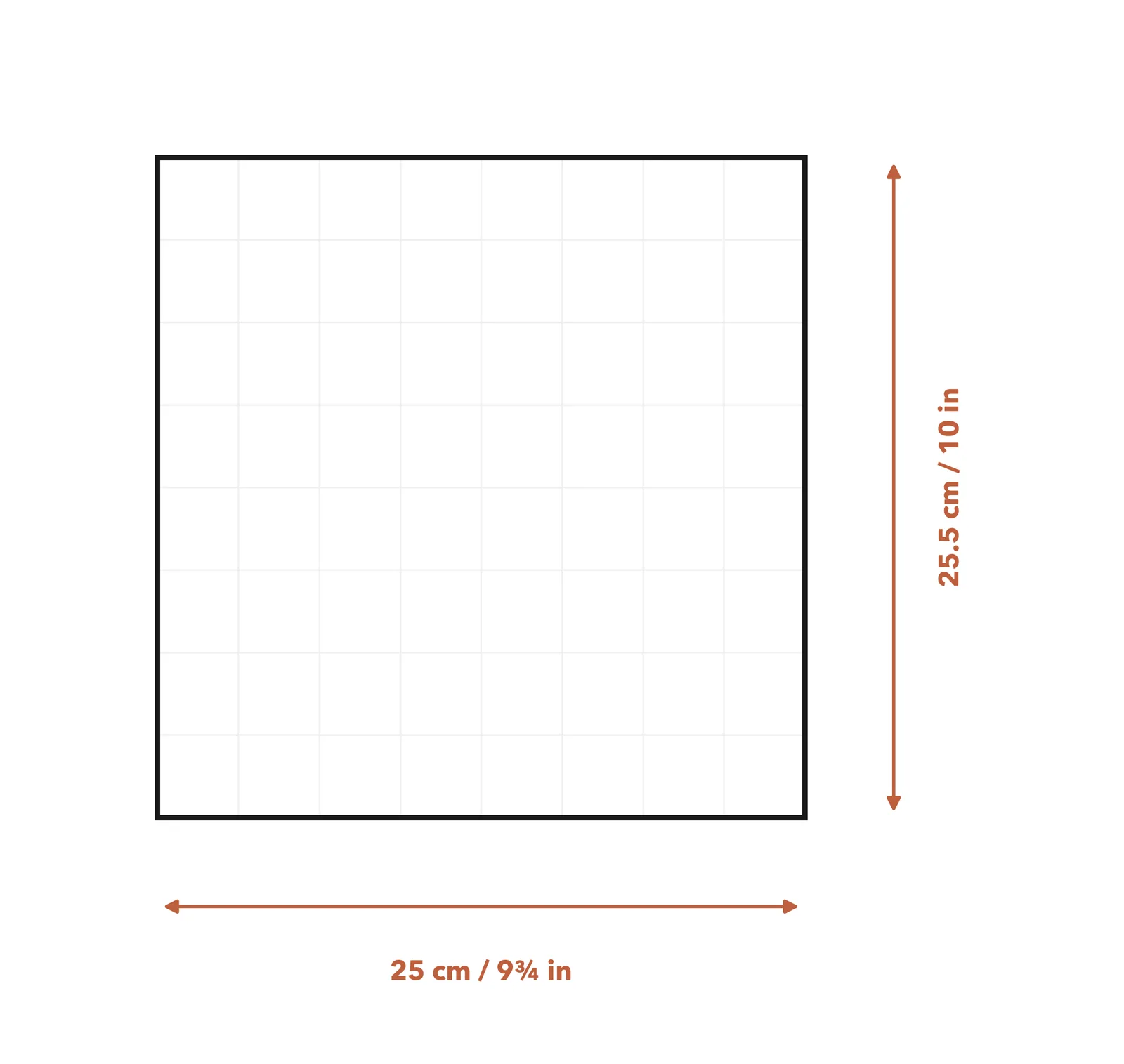
25 cm × 25.5 cm (9¾ in × 10 in)
Abbreviations
This pattern uses US crochet terms.
| ch | chain |
| hdc | half double crochet |
| sc | single crochet |
| st(s) | stitch(es) |
| rep | repeat |
| yo | yarn over |
Special stitches
Half double crochet (hdc)
The single crochet you know has three movements. The half double has four, and the extra one at the front is what makes it taller.
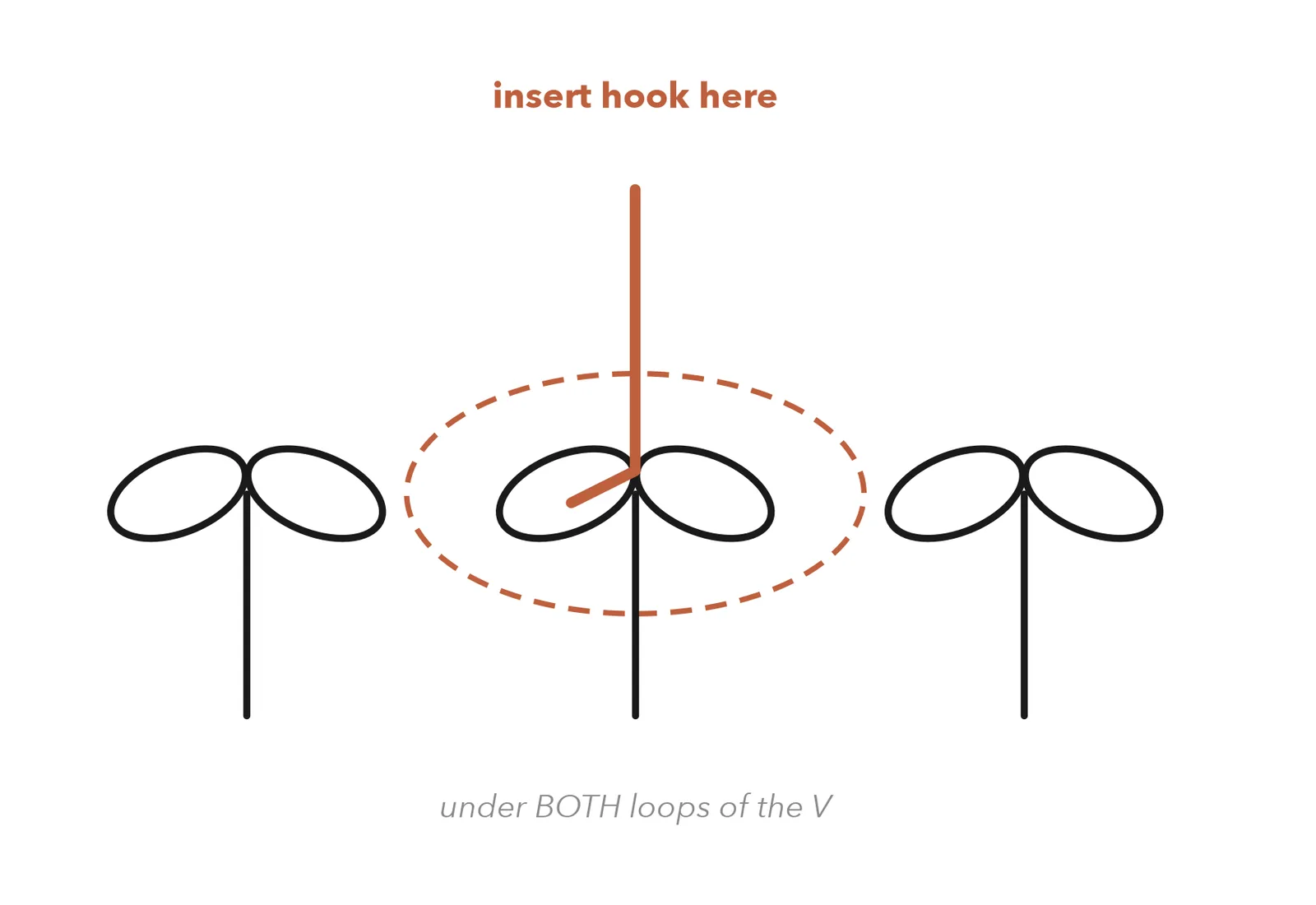
Yarn over first — before the hook goes anywhere. Insert the hook into the next stitch, under both loops of the V. Yarn over and pull up a loop: you now have three loops on the hook, which is the part that feels strange the first few times. Yarn over and pull through all three at once.
That is it. The only genuinely new idea is the yarn over before you insert the hook. Forget it and you have made a single crochet instead — which is a very common first-day mistake and easy to spot, because that stitch will sit visibly shorter than its neighbours.
Instructions
The dishcloth
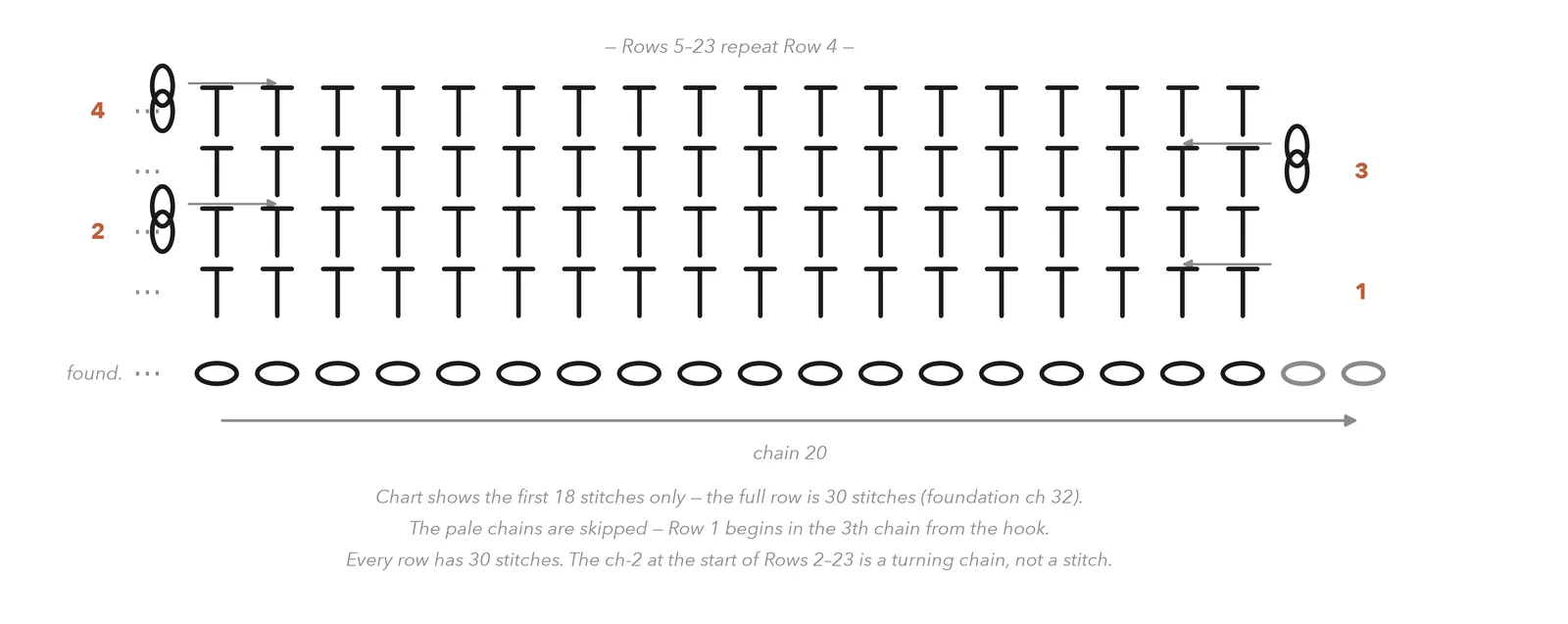
Worked flat, in rows, turning at the end of each row. The ch 2 at the start of every row is a turning chain and is never worked into.
Stitch chart
Notice how the symbol has grown. In chart notation the height of the symbol tells you the height of the stitch: a plus for single crochet, a bar with a flat top for half double, and taller posts still for the stitches coming in Pattern 3. Once you see that, most charts start reading themselves.
Finishing
Fasten off and weave in both tails as you did in Pattern 1 — through 4–5 stitches, then reverse direction for 2–3 more so the tail locks.
Cotton dishcloths do not need blocking. They find their shape after the first wash.
If you want a slightly firmer edge, work one round of single crochet around the whole cloth before fastening off, placing 3 sc in each corner. This is optional and not counted in the pattern.
If something has gone wrong
Those are single crochets — you forgot the yarn over before inserting the hook. The fix is only ever going forward: get into the rhythm of yarn over, in, up, through all three and say it aloud for a row.
The last stitch of the row is being missed. It sits directly above the turning chain and is genuinely hard to see in hdc, because the turning chain and the last stitch look similar. Mark the last stitch of each row until your eye learns it.
Normal with a ch-2 turning chain, and it closes up in the wash. If it bothers you, pull the first stitch of the row slightly tighter than the rest.
Your row gauge is tighter than your stitch gauge, which is extremely common and not a mistake. Simply work more rows until the piece is square, and note it — you now know something useful about how you crochet.
Usually tension. Cotton also relaxes a lot on the first wash, so wash it before you decide anything is wrong.
Caring for your finished piece
100% cotton: machine wash hot, tumble dry. These are meant to be used hard and washed often — cotton stands up to it and gets softer each time. Replace when it wears thin, which will take a while.
What's next
Pattern 3 of 12
Cozy Ribbed Scarf
Pattern 3 brings in the double crochet — taller again, and quicker again — along with a trick called back loop only that turns a flat fabric into a stretchy ribbed one. It is the first project you will actually wear, and the first one that looks like it came from a shop.